Reflections on Fitness and Weight Training
This is an article I wrote previously, which I’ve now migrated to my blog.
I’d like to share some thoughts on my weight training journey. The turning point that led me to start was after my military service, when I was diagnosed with spondylolysis. Quoting from the Dr.Ortho website:
Spondylolysis refers to a crack or stress fracture occurring in one of the vertebrae at the “pars interarticularis.” The pars interarticularis is the weakest part of a vertebra, connecting the upper and lower facet joints, making it the area most vulnerable to repetitive stress and overuse injuries. However, many sports repeatedly stress the pars, which can lead to fractures due to excessive pressure or overuse.
At the time, the doctor advised me to strengthen my core muscles to protect my spine, so I decided to take up weight training. In 2019, I signed up for a month of personal training sessions to learn the basics of classic compound barbell movements for each muscle group, such as squats, deadlifts, bench presses, and more.
After moving to Japan, I joined Anytime Fitness. However, I didn’t actually go very often—sometimes once or twice a week, sometimes consistently for a month when motivation struck, but whenever I got too busy or lazy, I would skip it. Consequently, my muscle-building progress was quite limited.
Why Weight Training Is So Important
Exercise brings countless benefits, and weight training is particularly effective at stimulating muscle growth. Having more muscle naturally improves your physique and helps burn more calories, creating a body that doesn’t gain fat as easily.
~~ (Once you hit thirty, you really notice a major drop in physical stamina.) ~~
I naturally have a rather slim build. Waiting until your body develops issues before starting to work out makes things much less efficient. For instance, I’m very prone to lower back soreness, and because of my spondylolysis, I don’t dare to lift too heavy.
If you’re looking for a more scientific explanation, you can check out Dr. Ho Li-an’s book, Anti-Aging: What You Need Is Heavy Weight Training, as well as his 2017 article, A Clear and Present Crisis. They might give you a fresh perspective.
According to the author, many aging-related issues are directly tied to muscle loss. Losing muscle slows down metabolism, leading to fat accumulation and a host of chronic diseases. Without adequate muscle support, elderly individuals may struggle even with basic self-care, and a simple fall can easily result in fractures.
Many people assume their way of exercising is beneficial to health, but it actually has major flaws.
The aging process depletes muscle and bone mass. Therefore, the primary goals of training should be to “increase muscle mass” and “increase bone density” in order to further enhance overall physical performance.
Of course, starting any form of exercise is always a positive thing, and beginning with cardio is totally fine. Still, I strongly recommend experiencing the benefits of weight training for yourself.
Results So Far
For me, the hardest part of weight training is consistency. I don’t particularly enjoy running or lifting weights, so even though I know how crucial it is, my workout frequency tends to fluctuate depending on what I’m prioritizing at any given phase. Recently, I’ve even let it slide for several months.
Here is a photo from my second year in Japan:

And here are photos after about eight months of weight training:
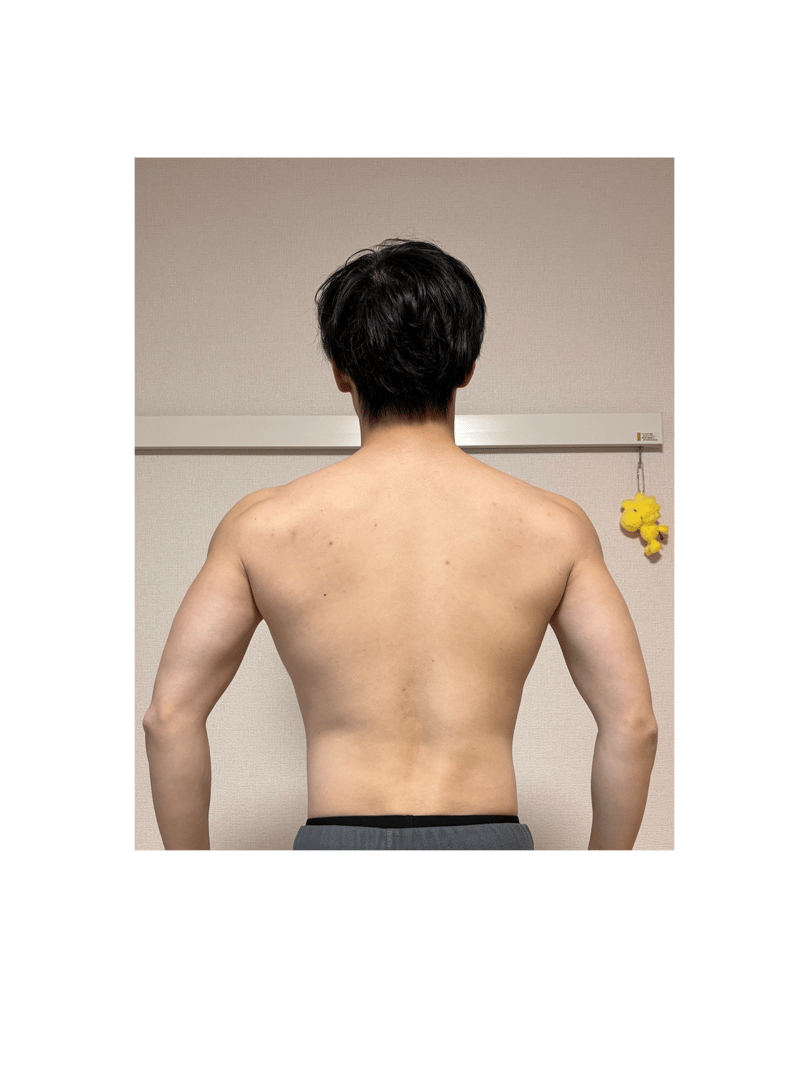

While it’s not an overwhelmingly dramatic bulk, it’s already significant progress for me. You see plenty of posts online where people get jacked in less than a year; sometimes that motivates me to train harder, but mostly, I just feel envious.
I usually went to the gym at night after work, which happened to be during a period when my work projects had a bit more breathing room. Looking back now, I really admire myself for sticking with it for that long.
How to Get Started
Everyone has their own goals when it comes to fitness. For me, the goal was to get healthier, and ideally build some muscle. There are countless resources online covering workout routines and exercise forms, so here I’d like to share how I managed to build and maintain the habit.
After moving to a new apartment, I bought a bicycle. I hated walking to the gym—it felt like a waste of time, which made me subconsciously resist going. Once I had a bike, getting to the gym took only ten minutes, which significantly reduced the friction.
Another strategy was consistent tracking. For example, tracking activity on my Apple Watch let me see whether I had hit my daily calorie burn. When I fell short, it pushed me to close those rings. During workouts, I would log the weights, sets, and reps for each session; watching the weights gradually increase was genuinely rewarding. What friction or obstacle is stopping you from starting? Find a way to eliminate it.
If you have the budget, signing up for personal training is the most efficient route. They can plan your diet and program, track your progress, and tailor cues to your specific needs; over time, you will definitely see results. If hiring a trainer isn’t an option, that’s fine too—watch videos, figure things out, start with machines, and make sure the safety pins are set if using barbells. Whatever you do, don’t let your ego take over and jump straight to heavy weights.
Once You Get the Hang of It
After working out for a while, you also need to adjust your nutrition according to your goals. Since I was in a muscle-building phase (bulking), I aimed for about 135g of protein a day. Without paying conscious attention to diet, most people simply don’t get enough protein—a large chicken thigh only has around 25g to 40g of protein, and with boba and sweetened drink culture, sugar intake easily shoots through the roof. Consciously increasing your protein intake will make a massive difference in muscle growth.
I was naturally skinny, and during my bulking phase, I ate so much that I actually started to dread eating. Fortunately, I’ve managed to find a better balance now. For naturally thin people, you truly have to eat aggressively to see noticeable gains. However, body fat will rise alongside muscle, so dietary control remains crucial.
Here is what my routine looked like:
- No alcohol
- Almost no sugary drinks (occasionally an energy drink)
- A fixed breakfast of oatmeal + protein shake (low-calorie and satiating)
- Primarily chicken breast; switched to chicken thighs when tired of it, with occasional salmon, red meat, or mackerel
- Drink EAAs before workouts
- Supplements (B-complex vitamins and zinc)
- 20 minutes of cardio after weight training
- Four meals a day
Maintaining a high-quality weight training lifestyle takes both time and money, so I relied on foolproof cooking methods like boiling or air-frying as much as possible. I also discovered that boiled chicken breast seasoned with curry powder is surprisingly delicious—highly recommended!
Having personally experienced the benefits of lifting, I naturally want to encourage everyone to start. That said, depending on your lifestyle and current priorities, you can easily begin with short sessions or bodyweight exercises. If the gym is too far, get a pair of dumbbells for home. You don’t have to get everything perfect from day one.
Progressive overload (increasing weight) is key to muscle growth, so aim to lift slightly more than your previous session whenever possible. Also, don’t make rest periods between sets too short—try to keep them around 2 to 3 minutes. For compound movements like bench presses and squats, resting even longer is completely fine.
Mindset Adjustments
Building muscle is really tough! Over four months, I went to the gym almost six days a week for about 90 minutes each session, gaining roughly 2.7 kg of muscle. Personally, I consider that pretty decent progress—part of it was beginner gains, though I’ve hit a plateau now. Muscle builds very slowly; it takes months to see visible changes. Of course, genetic outliers are another story.
Based on my experience, you need to hit the gym (for lifting) at least four times a week to see noticeable results within a few months.
Partway through my journey, I realized that the highest-ROI muscle group for looking visibly bigger is the shoulders. The shoulder-to-waist ratio drastically alters your silhouette, so prioritizing shoulder training yields great returns. Just be sure to start with lighter weights, as shoulders are prone to injury. Arms are harder to notice once you put clothes on, but broader shoulders instantly make your clothes drape much better. Next is the chest—a developed chest fills out shirts so they don’t look loose or baggy.
As for legs, they are also mostly hidden once you wear pants, unless your quads are bursting through the fabric. However, for everyday life, strong legs make walking, cycling, and climbing stairs significantly easier. Furthermore, the lower body accounts for over 65% of total muscle mass. While leg development might not offer huge visual gains unless you’re wearing shorts, the payoff for functional movement and calorie burning is enormous.
There are some great exercises that I rarely did, such as hip thrusts. Without a dedicated machine, setting up the barbell is a hassle and wastes a lot of time, and if there is a machine, you often have to wait for it. When selecting exercises, the accessibility of equipment is definitely worth factoring in.
What Happened After?
Over the past two years, my training frequency has dropped dramatically, and I haven’t been as strict with my nutrition. On one hand, my life priorities shifted, requiring deep focus on work; on the other hand, I simply lost the drive to keep lifting. Having a workout buddy definitely makes consistency much easier. To maintain my current routine while sticking to weight training, I’d have to wake up early—and unfortunately, I’m really not a morning person 😂.
If any readers have gone through a period of lifting, fallen off the wagon, and managed to pick it back up again, I’d love to hear your stories!
Related Posts
- How to Prepare for Software Engineering Interviews Preparing for tech interviews has always been challenging. One of the most frustrating parts is the heavily one-sided power dynamic. As a candidate, it's hard to gauge their actual standards, and it's easy to spiral into self-doubt afterward. Let's talk about it.
- Words That Changed My Outlook on Life Feynman, Chaplin, and the movie Hyakumeter: from an insecure boy to someone capable of helping others, sharing the reflections and life philosophies that shaped me most.
- N Benefits of an Independent Website Why spend time running your own blog in an era dominated by short-form video and social media? Here are my thoughts after nearly a decade of blogging.
- Authority and Responsibility: The Root Cause of Workplace Friction Want employees to work late every day and hustle like a founder? Give them equity.